

As a supplier of Refrigerator and Chiller, I often encounter inquiries from customers about the performance and practicality of our products in high - temperature environments. This topic is not only relevant to the daily operation of businesses but also crucial for the preservation of various items. In this blog, I will delve into the question of whether a refrigerator and a chiller can be used in a high - temperature environment.
Understanding the Basics of Refrigerators and Chillers
Before we discuss their performance in high - temperature settings, it's essential to understand the basic working principles of refrigerators and chillers. Both are designed to remove heat from an enclosed space and transfer it to the surrounding environment. A refrigerator typically maintains a temperature above freezing, usually between 2°C and 8°C, suitable for storing food, beverages, and some medications. A chiller, on the other hand, can achieve much lower temperatures, often below 0°C, and is commonly used in industrial applications, such as cooling machinery or storing certain chemicals.
The core components of a refrigerator and a chiller include a compressor, condenser, evaporator, and expansion valve. The compressor compresses the refrigerant gas, increasing its temperature and pressure. The hot, high - pressure gas then flows to the condenser, where it releases heat to the surrounding air or water and condenses into a liquid. The liquid refrigerant passes through the expansion valve, which reduces its pressure and temperature. Finally, the cold refrigerant enters the evaporator, where it absorbs heat from the enclosed space, cooling it down.
Challenges in High - Temperature Environments
When a refrigerator or a chiller is placed in a high - temperature environment, several challenges arise.
1. Increased Heat Load
The most obvious challenge is the increased heat load. In a high - temperature environment, the temperature difference between the inside and outside of the unit is much smaller. According to the laws of thermodynamics, heat transfer occurs from a high - temperature area to a low - temperature area. With a smaller temperature difference, the rate of heat transfer into the unit is slower, but the overall heat load is still significant. The unit has to work harder to maintain the desired low temperature inside.
For example, if a refrigerator is designed to maintain a temperature of 4°C in a room with a temperature of 25°C, the temperature difference is 21°C. However, if the room temperature rises to 35°C, the temperature difference is reduced to 31°C, and the heat transfer rate from the outside to the inside of the refrigerator increases. The compressor has to run more frequently and for longer periods to remove the additional heat, which can lead to increased energy consumption and wear and tear on the components.
2. Reduced Condenser Efficiency
The condenser is responsible for releasing heat from the refrigerant to the surrounding environment. In a high - temperature environment, the air or water used to cool the condenser is already hot. This reduces the efficiency of the condenser, as the temperature difference between the refrigerant and the cooling medium is smaller. As a result, the refrigerant may not be able to release heat effectively, and its temperature and pressure may remain high.
A high - pressure refrigerant can cause the compressor to work harder, increasing the risk of overheating and mechanical failure. In some cases, the compressor may even shut down automatically to protect itself from damage, which can lead to a rise in the temperature inside the unit and spoilage of the stored items.
3. Lubrication and Component Degradation
High temperatures can also affect the lubrication of the moving parts in the compressor and other components. Lubricants tend to thin out at high temperatures, reducing their ability to provide adequate lubrication. This can increase friction between the moving parts, leading to premature wear and tear. Additionally, high temperatures can cause the materials used in the components to expand, which may affect their fit and performance.
Adaptations and Solutions
Despite these challenges, there are several ways to make refrigerators and chillers suitable for high - temperature environments.
1. High - Capacity Compressors
One solution is to use high - capacity compressors. A high - capacity compressor can handle a larger heat load and maintain the desired temperature more effectively. It can provide more cooling power, allowing the unit to overcome the increased heat transfer from the outside. However, high - capacity compressors also consume more energy, so it's important to balance the cooling capacity with energy efficiency.
2. Improved Condenser Design
Another approach is to improve the condenser design. For example, using a larger condenser or a more efficient cooling method can enhance the heat - dissipation ability. Some condensers are designed with fins or other features to increase the surface area for heat transfer. Additionally, using water - cooled condensers instead of air - cooled condensers can be more effective in high - temperature environments, as water has a higher heat capacity than air and can absorb more heat.
3. Insulation
Proper insulation is crucial for reducing the heat load on the unit. Using high - quality insulation materials can minimize the heat transfer from the outside to the inside of the unit. Thicker insulation can also help maintain a more stable temperature inside, reducing the workload on the compressor.
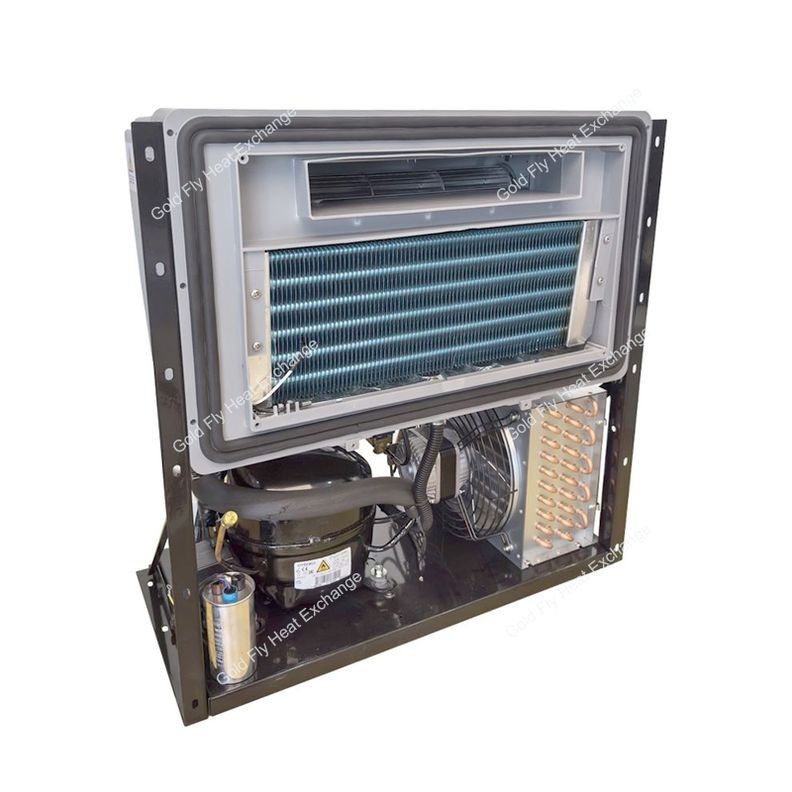
4. Monoblock Refrigeration Unit
Monoblock refrigeration units are another option for high - temperature environments. These units integrate all the components, including the compressor, condenser, and evaporator, into a single compact unit. They are designed to be more efficient and reliable in challenging conditions. The compact design allows for better heat management, and the unit can be installed in a more controlled environment, such as inside a cabinet or enclosure, to protect it from extreme temperatures.

Real - World Applications
In many industries, refrigerators and chillers are used in high - temperature environments. For example, in the food service industry, commercial refrigerators are often placed in kitchens, where the temperature can be quite high due to cooking activities. In tropical regions, refrigeration units are used to store food and beverages in outdoor markets and restaurants, where the ambient temperature can exceed 35°C.
In industrial settings, chillers are used to cool machinery and equipment in hot manufacturing plants. These chillers need to operate continuously in high - temperature environments to ensure the proper functioning of the equipment.
Conclusion
In conclusion, while using a refrigerator and a chiller in a high - temperature environment presents several challenges, it is possible with the right adaptations and solutions. High - capacity compressors, improved condenser design, proper insulation, and the use of Monoblock Refrigeration Unit can help these units perform effectively in such conditions.
If you are in need of a refrigerator or a chiller for a high - temperature environment, we are here to help. Our team of experts can provide you with customized solutions based on your specific requirements. Whether you need a small - scale refrigerator for a restaurant or a large - scale chiller for an industrial application, we have the products and expertise to meet your needs. Contact us today to start a discussion about your refrigeration requirements and explore the best options for your business.
References
- ASHRAE Handbook of Refrigeration. American Society of Heating, Refrigerating and Air - Conditioning Engineers.
- "Thermodynamics: An Engineering Approach" by Yunus A. Cengel and Michael A. Boles.