

As a supplier of Copper Tube Condenser, I've been getting a lot of questions from customers about how the number of copper tubes in a condenser affects its performance. So, I thought I'd write this blog to share some insights on this topic.
Let's start with the basics. A condenser is a crucial part of a refrigeration or air - conditioning system. Its main job is to transfer heat from the refrigerant to the surrounding environment, changing the refrigerant from a high - pressure gas to a high - pressure liquid. Copper tubes are commonly used in condensers because copper is an excellent conductor of heat, it's relatively corrosion - resistant, and it's easy to work with.
Heat Transfer Capacity
One of the most significant ways the number of copper tubes impacts condenser performance is through heat transfer capacity. Heat transfer in a condenser occurs mainly through conduction and convection. The more copper tubes you have, the larger the surface area available for heat transfer.
Think of it like this: If you're trying to cool a hot cup of coffee, you'd cool it faster if you poured it into multiple smaller cups rather than leaving it in one big cup. The increased surface area of the smaller cups allows more heat to escape to the surrounding air. Similarly, in a condenser, more copper tubes mean more surface area for the refrigerant inside the tubes to transfer heat to the air or coolant flowing outside the tubes.
For example, in a small - scale air - conditioning unit for a single room, a condenser with a limited number of copper tubes might be sufficient. But for a large commercial Condenser Coil Chiller used in a big office building, a condenser with a large number of copper tubes is necessary to handle the high heat load. The additional tubes can transfer heat more efficiently, ensuring that the chiller can cool the large volume of water or air required for the building's climate control.
Pressure Drop
However, adding more copper tubes isn't all sunshine and rainbows. One of the drawbacks is an increase in pressure drop. Pressure drop refers to the decrease in pressure of the refrigerant as it flows through the condenser. When you have more tubes, the refrigerant has to travel through a more complex path. This means there are more bends, turns, and restrictions for the refrigerant to navigate.
As a result, the refrigerant experiences more resistance, and the pressure drops. A significant pressure drop can be a problem because it requires the compressor in the refrigeration system to work harder to maintain the necessary pressure. This not only increases energy consumption but can also lead to premature wear and tear on the compressor.
Let's say you have a condenser with a relatively small number of tubes. The refrigerant can flow through them relatively easily, with minimal pressure drop. But if you double the number of tubes without making other adjustments to the system, the pressure drop might increase to a point where the compressor has to use a lot more energy to push the refrigerant through.

Airflow and Fan Power
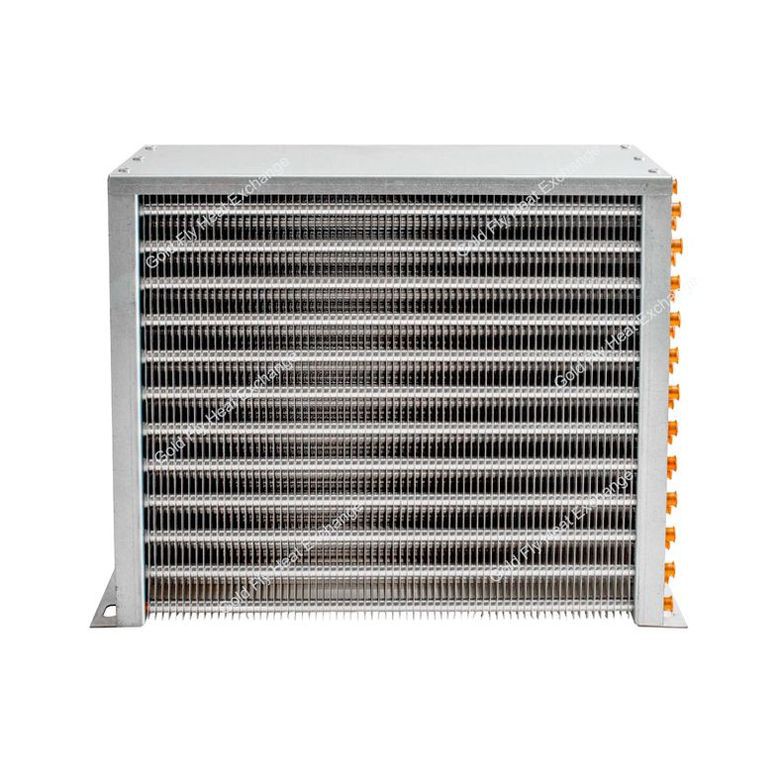
The number of copper tubes also affects the airflow around the condenser. In an air - cooled condenser, fans are used to blow air over the copper tubes to remove heat. When there are more tubes, the airflow path becomes more obstructed. The air has to squeeze through the narrow spaces between the tubes, which can reduce the overall airflow rate.
To maintain the required airflow, the fans need to work harder. This means an increase in fan power consumption. For example, a condenser with a sparse arrangement of tubes allows air to flow freely, and the fans can operate at a lower speed. But a condenser with a dense arrangement of many tubes might require the fans to run at a higher speed, consuming more electricity.
Cost Considerations
From a cost perspective, the number of copper tubes has a direct impact. Copper is not a cheap material, so adding more tubes increases the material cost of the condenser. Additionally, as we've discussed, more tubes can lead to higher energy consumption due to increased pressure drop and fan power requirements.
On the other hand, if you don't have enough tubes, the condenser might not be able to handle the heat load effectively. This could result in reduced system performance, leading to discomfort in the conditioned space and potentially more frequent breakdowns. So, it's a balancing act. You need to find the optimal number of tubes that provides good performance without breaking the bank.
Finding the Optimal Number
So, how do you determine the optimal number of copper tubes for a condenser? It depends on several factors. First, you need to consider the heat load of the system. A larger heat load generally requires more tubes for efficient heat transfer. Second, the available space for the condenser is important. If you have limited space, you might need to use a more compact design with a higher density of tubes, but you'll have to be careful about pressure drop and airflow issues.
The type of refrigerant used also matters. Different refrigerants have different heat transfer characteristics and pressure requirements. For example, some refrigerants are more prone to pressure drop than others, so you might need to adjust the number of tubes accordingly.
In addition, the design of the condenser, such as the tube diameter, tube pitch (the distance between adjacent tubes), and the fin design (if fins are used to increase the surface area), all interact with the number of tubes to affect performance.
Conclusion
In conclusion, the number of copper tubes in a condenser has a profound impact on its performance. While more tubes can increase heat transfer capacity, they also bring challenges such as increased pressure drop, reduced airflow, and higher costs. As a Copper Tube Condenser supplier, we understand the importance of finding the right balance.
If you're in the market for a condenser and want to make sure you get the best performance for your specific needs, don't hesitate to reach out to us. We have a team of experts who can help you select the optimal condenser design, taking into account all the factors we've discussed. Whether it's for a small residential application or a large - scale commercial project, we're here to assist you in making the right choice. Contact us today to start the procurement and negotiation process!
References
- Incropera, F. P., DeWitt, D. P., Bergman, T. L., & Lavine, A. S. (2007). Fundamentals of Heat and Mass Transfer. John Wiley & Sons.
- Stoecker, W. F., & Jones, J. W. (1982). Refrigeration and Air Conditioning. McGraw - Hill.