

Hey there! As a supplier of Condenser Coil Chillers, I've got a ton of hands - on experience with these cooling systems. Today, I want to break down the differences between single - stage and multi - stage condenser coil chillers for you.
Let's start with the basics. Both single - stage and multi - stage condenser coil chillers are used to remove heat from a process or space. They work by using a refrigerant that circulates through a closed loop system, absorbing heat from the area to be cooled and then releasing it outside. But the way they do this is where the differences come in.
Single - Stage Condenser Coil Chillers
Single - stage chillers are the more straightforward option. They've got a single compressor that runs at a fixed speed. When the chiller is turned on, the compressor kicks in at full capacity and stays running until the desired temperature is reached. Then it shuts off.
One of the big advantages of single - stage chillers is their simplicity. They're easier to understand, install, and maintain. If you're on a tight budget, they're usually the more affordable option upfront. You don't have to worry about complex controls or multiple stages of compression, which means fewer parts that can break down.
However, single - stage chillers aren't always the most efficient. Since the compressor runs at full capacity all the time, it can use a lot of energy, especially if the cooling load isn't very high. For example, if you're only cooling a small area or if the heat load varies throughout the day, a single - stage chiller might be overkill. It'll keep running at full speed even when it doesn't need to, which can lead to higher energy bills.
Another drawback is that single - stage chillers can be a bit less precise when it comes to temperature control. They either run at full blast or they're off. This can cause temperature fluctuations, which might not be ideal for applications where a stable temperature is crucial, like in some industrial processes or data centers.
Multi - Stage Condenser Coil Chillers
Now, let's talk about multi - stage condenser coil chillers. These bad boys have multiple compressors or a compressor with multiple stages of compression. This allows the chiller to adjust its cooling capacity based on the actual heat load.
When the cooling demand is low, only one stage or a smaller compressor will run. As the heat load increases, more stages or compressors can be activated. This means that multi - stage chillers are much more energy - efficient than single - stage ones. They can save you a significant amount of money on your energy bills over time, especially in applications where the cooling load varies a lot.

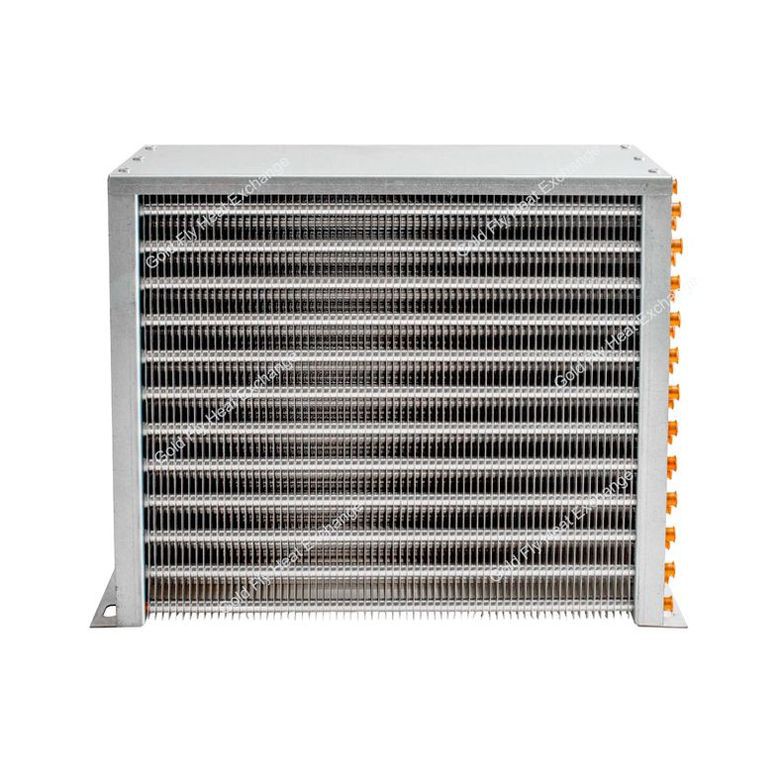
In terms of temperature control, multi - stage chillers are far superior. They can maintain a more stable temperature because they can fine - tune their cooling output. This makes them a great choice for applications where precise temperature control is essential. For example, in a pharmaceutical lab, where even a small temperature change can affect the quality of the products, a multi - stage chiller can keep things just right.
But multi - stage chillers do come with some downsides. They're more complex than single - stage chillers. The additional compressors and controls mean that there are more parts that can malfunction. This can make them more expensive to install and maintain. You might also need a more skilled technician to work on them if something goes wrong.
Performance Comparison
Let's dig a bit deeper into the performance differences between these two types of chillers.
In terms of efficiency, multi - stage chillers win hands down. They can adapt to changing heat loads, which means they use only the amount of energy they need. This is especially important in large commercial buildings or industrial facilities where the cooling load can vary greatly depending on the time of day, the number of people in the building, or the production schedule.
Single - stage chillers, on the other hand, are less efficient because they run at full capacity regardless of the actual heat load. This can lead to a lot of wasted energy, especially during periods of low demand.
When it comes to capacity control, multi - stage chillers offer much more flexibility. They can start and stop individual stages or compressors as needed, allowing for a more precise match between the cooling output and the heat load. Single - stage chillers, with their all - or - nothing approach, can't offer this level of control.
Cost Considerations
Cost is always a big factor when choosing a chiller. As I mentioned earlier, single - stage chillers are usually cheaper upfront. If you're on a tight budget and don't need precise temperature control or high energy efficiency, they might be the way to go.
However, when you look at the long - term costs, multi - stage chillers can be more cost - effective. The energy savings over time can offset the higher initial purchase and installation costs. Plus, if your application requires precise temperature control, the cost of potential product losses or equipment damage due to temperature fluctuations with a single - stage chiller could be much higher than the extra cost of a multi - stage chiller.
Applications
The choice between single - stage and multi - stage chillers also depends on the application.
Single - stage chillers are well - suited for small - scale applications with a relatively constant heat load. For example, a small office or a residential building might be a good fit for a single - stage chiller. They're also a good option for applications where cost is the main concern and a little bit of temperature fluctuation is acceptable.
Multi - stage chillers, on the other hand, are ideal for large commercial and industrial applications. Data centers, hospitals, and manufacturing plants often require precise temperature control and can benefit from the energy efficiency of multi - stage chillers. They're also a great choice for applications where the cooling load varies significantly, like in a building with a large number of windows or a manufacturing process that has different production levels throughout the day.
The Role of Copper Tube Condensers
Whether you choose a single - stage or a multi - stage condenser coil chiller, the condenser coil is a crucial component. Copper Tube Condensers are a popular choice because copper is an excellent conductor of heat. This means that the condenser can transfer heat more efficiently, which improves the overall performance of the chiller.
Copper tube condensers are also durable and resistant to corrosion. They can withstand the harsh conditions inside a chiller system, which helps to extend the lifespan of the chiller. Whether you're using a single - stage or multi - stage chiller, a high - quality copper tube condenser can make a big difference in terms of efficiency and reliability.
Conclusion
So, there you have it - the differences between single - stage and multi - stage condenser coil chillers. Each type has its own pros and cons, and the right choice for you depends on your specific needs, budget, and application.
If you're still not sure which type of chiller is right for you, don't hesitate to reach out. As a supplier of Condenser Coil Chillers, I'm here to help you make an informed decision. We can discuss your requirements in detail and find the best solution for your cooling needs. Contact us today to start the conversation about your next condenser coil chiller purchase.
References
- ASHRAE Handbook - HVAC Systems and Equipment.
- Chiller Efficiency Guide by the U.S. Department of Energy.