

As a supplier of R290 condensing units, I often get asked about the cooling capacity of these units. In this blog post, I'll delve into what cooling capacity means, how it's measured, and what factors can affect the cooling capacity of an R290 condensing unit.
Understanding Cooling Capacity
Cooling capacity is a measure of the amount of heat that a refrigeration system can remove from a space in a given period. It is typically expressed in British Thermal Units per hour (BTU/h) or in kilowatts (kW). One BTU is the amount of heat required to raise the temperature of one pound of water by one degree Fahrenheit. In the metric system, one kilowatt is equal to 3412.14 BTU/h.
The cooling capacity of a condensing unit is crucial as it determines how effectively the unit can cool a specific area or volume. For instance, a small under - counter fridge will require a condensing unit with a lower cooling capacity compared to a large commercial cold storage room.
Measuring the Cooling Capacity of R290 Condensing Units
The cooling capacity of an R290 condensing unit is measured under specific test conditions. These conditions are standardized to ensure that the reported cooling capacity is an accurate representation of the unit's performance.
Typically, the test involves running the condensing unit in a controlled environment with a set temperature and humidity. The unit is then allowed to reach a steady - state operation, and the amount of heat removed from the test chamber is measured over a period of time. This measurement is then converted into BTU/h or kW.
It's important to note that the actual cooling capacity of an R290 condensing unit in a real - world application may vary from the rated capacity. This is due to factors such as the ambient temperature, the load inside the refrigerated space, and the efficiency of the entire refrigeration system.
Factors Affecting the Cooling Capacity of R290 Condensing Units
Ambient Temperature
The ambient temperature plays a significant role in the cooling capacity of an R290 condensing unit. As the ambient temperature rises, the condensing unit has to work harder to reject the heat. This means that the cooling capacity of the unit decreases as the outside temperature increases.
For example, an R290 condensing unit that has a rated cooling capacity of 5000 BTU/h at an ambient temperature of 25°C may only have a cooling capacity of 4000 BTU/h when the ambient temperature rises to 35°C. This is because the compressor has to work against a higher pressure difference to transfer the heat from the refrigerated space to the outside environment.
Refrigerated Space Load
The load inside the refrigerated space also affects the cooling capacity of the condensing unit. The load includes the heat generated by the products stored inside the fridge or freezer, as well as the heat that enters the space through insulation leaks and door openings.
If the load is high, the condensing unit has to remove more heat to maintain the desired temperature. This can cause the unit to operate at a higher capacity, which may lead to increased energy consumption and potentially reduced lifespan of the unit.
System Efficiency
The overall efficiency of the refrigeration system, including the evaporator, condenser, and refrigerant piping, can impact the cooling capacity of the R290 condensing unit. A well - designed and properly installed system will allow the condensing unit to operate more efficiently, resulting in a higher effective cooling capacity.
For instance, if the evaporator is not sized correctly or is dirty, it may not be able to absorb heat effectively from the refrigerated space. This will reduce the overall cooling capacity of the system, even if the condensing unit is operating at its rated capacity.
Advantages of R290 Condensing Units in Terms of Cooling Capacity
R290, also known as propane, is a natural refrigerant that offers several advantages in terms of cooling capacity. Firstly, R290 has excellent thermodynamic properties, which means that it can transfer heat more efficiently compared to some synthetic refrigerants.
This high heat transfer efficiency allows R290 condensing units to achieve a relatively high cooling capacity with a smaller compressor size. As a result, R290 condensing units can be more compact and energy - efficient, making them a popular choice for a wide range of applications, from small Monoblock Refrigeration Unit to large Refrigerator and Chiller systems.

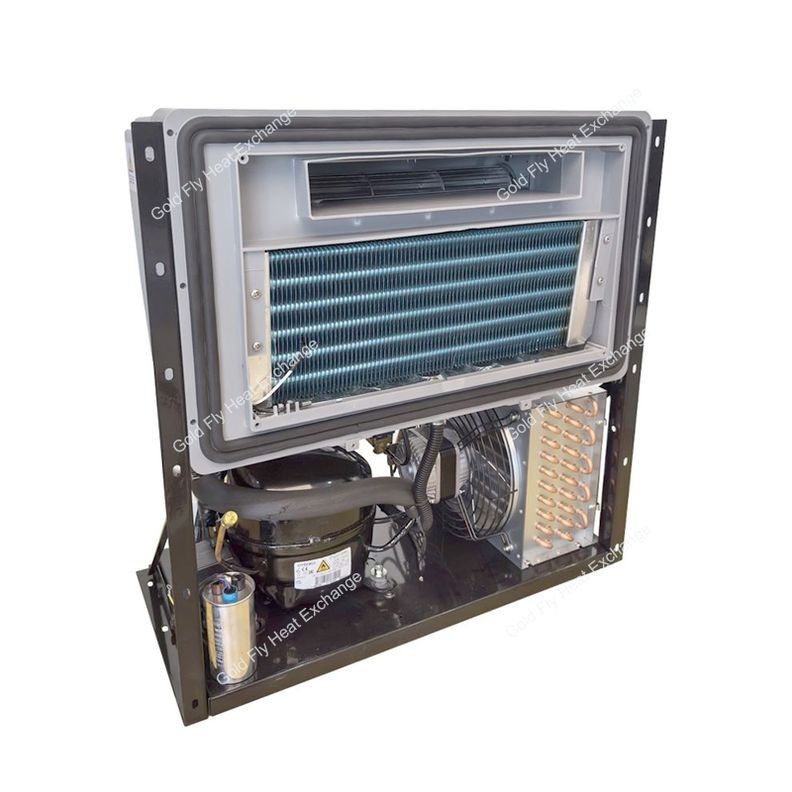
Secondly, R290 has a low global warming potential (GWP) of 3, which is significantly lower than many synthetic refrigerants. This makes R290 condensing units an environmentally friendly option without sacrificing cooling performance.
Applications of R290 Condensing Units Based on Cooling Capacity
The cooling capacity of R290 condensing units makes them suitable for various applications.
Domestic Refrigeration
For domestic refrigerators and freezers, R290 condensing units with a cooling capacity ranging from 500 to 2000 BTU/h are commonly used. These units can effectively cool the small volumes of domestic refrigeration appliances while consuming less energy.
Commercial Refrigeration
In commercial settings, such as supermarkets and restaurants, R290 condensing units with higher cooling capacities are required. Units with cooling capacities ranging from 5000 to 20,000 BTU/h or more are used to cool large display cases, walk - in coolers, and freezers.
Industrial Refrigeration
Industrial applications, such as food processing plants and cold storage warehouses, may require R290 condensing units with extremely high cooling capacities. These units can have cooling capacities of 50,000 BTU/h or more, depending on the size of the facility and the cooling requirements.
Conclusion
The cooling capacity of an R290 condensing unit is a critical factor to consider when selecting a refrigeration system. It is influenced by various factors such as ambient temperature, refrigerated space load, and system efficiency.
R290 condensing units offer high cooling capacity with the advantages of energy efficiency and environmental friendliness. Whether you are looking for a solution for domestic, commercial, or industrial refrigeration, R290 condensing units can provide a reliable and effective cooling option.
If you are in the market for an R290 condensing unit and want to discuss your specific cooling requirements, I encourage you to reach out for a detailed consultation. We can help you select the right unit with the appropriate cooling capacity for your application.
References
ASHRAE Handbook - Refrigeration. American Society of Heating, Refrigerating and Air - Conditioning Engineers.
"Refrigeration and Air Conditioning Technology" by William C. Whitman, William M. Johnson, and John Tomczyk.