

Yo, what's up everyone! I'm a supplier of Copper Tube Condenser, and today I wanna chat about the temperature range for a copper tube condenser.
First off, let's get into what a copper tube condenser actually does. A condenser is a key part in a lot of cooling and heating systems. It takes in high-temperature, high-pressure vapor and turns it into a liquid by releasing heat. Copper is a top choice for making condenser tubes because it's got great thermal conductivity, is corrosion-resistant, and can be easily formed.
Now, the temperature range for a copper tube condenser can vary based on a bunch of factors. One of the main things is the application it's used for.
HVAC Systems
In heating, ventilation, and air conditioning (HVAC) systems, copper tube condensers are super common. In a typical air conditioning setup, the refrigerant enters the condenser as a high-temperature, high-pressure vapor. The temperature of this vapor can be around 120°F to 150°F (49°C to 66°C). As the refrigerant passes through the copper tubes and releases heat to the surrounding air or water, it starts to condense. By the time it leaves the condenser, it's usually a liquid at a temperature of around 90°F to 110°F (32°C to 43°C).
The outdoor temperature also plays a big role. On a really hot day, say when it's over 95°F (35°C) outside, the condenser has to work harder to release heat. This can cause the refrigerant temperature inside the condenser to be higher than normal. But copper tube condensers are designed to handle these fluctuations. They can usually operate effectively in outdoor temperatures ranging from around 5°F to 120°F (-15°C to 49°C).
Industrial Cooling
In industrial settings, the temperature requirements can be way different. For example, in some chemical processing plants, the condenser might need to handle much higher temperatures. The refrigerant vapor entering the condenser could be as hot as 200°F to 300°F (93°C to 149°C) or even more in some extreme cases.
These high temperatures are often due to the nature of the industrial processes. The copper tube condenser has to be built to withstand these conditions. Special coatings or thicker copper tubes might be used to ensure durability. The condensing temperature in industrial applications can also vary widely, but it's typically in the range of 120°F to 200°F (49°C to 93°C).
Refrigeration Systems
Refrigeration systems, like those in supermarkets or cold storage facilities, also rely on copper tube condensers. In a commercial refrigeration unit, the refrigerant vapor enters the condenser at a temperature of around 100°F to 130°F (38°C to 54°C). After the condensing process, the liquid refrigerant leaves at a temperature of about 70°F to 90°F (21°C to 32°C).
The temperature range for these condensers is usually optimized for the specific cooling requirements of the refrigerated space. For example, a freezer unit will need a condenser that can maintain lower temperatures compared to a regular refrigerated display case.
Factors Affecting the Temperature Range
There are several factors that can affect the temperature range of a copper tube condenser.
- Flow Rate: The rate at which the refrigerant or the cooling medium (air or water) flows through the condenser is crucial. If the flow rate is too low, the heat transfer will be less efficient, and the temperature inside the condenser can rise. On the other hand, if the flow rate is too high, it might cause excessive pressure drop and other operational issues.
- Heat Load: The amount of heat that the condenser needs to remove is another important factor. A larger heat load means the condenser has to work harder, which can lead to higher operating temperatures.
- Condenser Design: The design of the condenser, including the number of tubes, the tube diameter, and the fin configuration, can also impact the temperature range. A well-designed condenser will have better heat transfer efficiency and can operate within a wider temperature range.
Maintenance and Temperature Range
Proper maintenance is essential to keep the copper tube condenser operating within its optimal temperature range. Over time, dirt, dust, and debris can accumulate on the condenser coils. This can act as an insulator and reduce the heat transfer efficiency. As a result, the temperature inside the condenser can increase, and the system might not work as effectively.

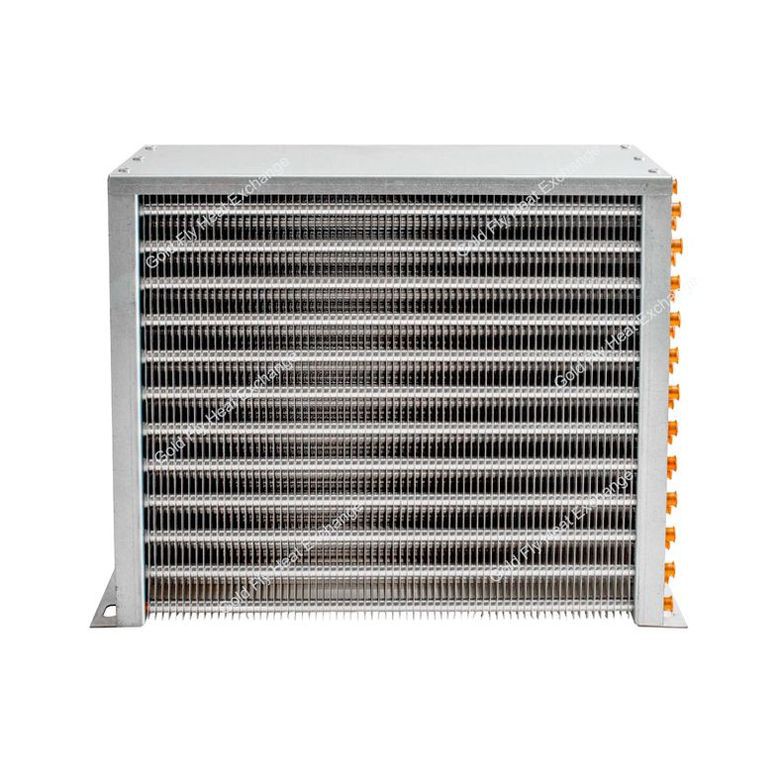
Regular cleaning of the condenser coils is a must. You can use a soft brush or a low-pressure water spray to remove the dirt. It's also important to check for any leaks in the refrigerant lines or the condenser tubes. A refrigerant leak can cause the temperature and pressure inside the condenser to change, which can lead to system failures.
Choosing the Right Condenser
If you're in the market for a copper tube condenser, it's important to choose one that's suitable for your specific application. Consider the temperature range requirements, the heat load, and the operating environment.
Our company offers a wide range of Copper Tube Condensers that are designed to meet different needs. We also have Condenser Coil Chillers that are great for more specialized cooling applications.
If you're interested in learning more about our products or have any questions about the temperature range for a copper tube condenser, don't hesitate to reach out. We're here to help you find the best solution for your cooling or heating needs. Whether you're in the HVAC industry, industrial manufacturing, or refrigeration business, we've got the expertise and the products to support you.
So, if you're thinking about a new condenser or need to replace an old one, give us a shout. We'll work with you to ensure you get a high-quality copper tube condenser that performs well within your required temperature range.
References
- ASHRAE Handbook - Refrigeration
- Industrial Refrigeration Handbook
- Copper Development Association Technical Guides