

Do evaporator coil dimensions vary based on the type of refrigerant used? That's a question I get asked a lot as a supplier of Evaporator Coil Dimensions. And the short answer is yes, they do. But let's dive a bit deeper into why that is and what it means for you.
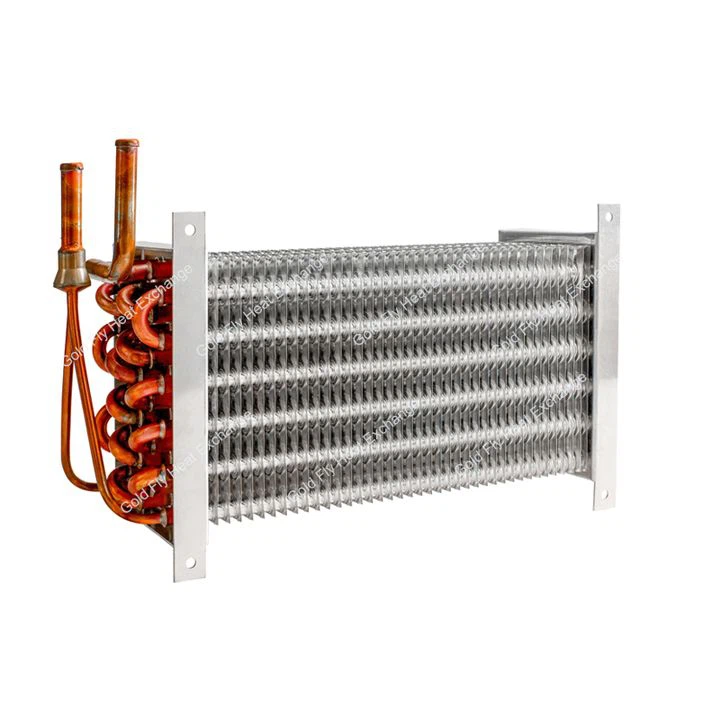
First off, let's talk about what an evaporator coil does. In a nutshell, it's a key part of a refrigeration or air - conditioning system. The refrigerant flowing through the coil absorbs heat from the surrounding air or fluid, causing it to evaporate. This phase change from liquid to gas is what allows the system to cool things down.
Now, different refrigerants have different properties. These properties include things like boiling point, heat capacity, and density. For example, some refrigerants have a lower boiling point than others. That means they can start evaporating at a lower temperature. When a refrigerant has a lower boiling point, it can absorb heat more quickly in certain conditions.
Let's take R - 22 and R - 410A as an example. R - 22 was a commonly used refrigerant in the past, but due to its ozone - depleting potential, it's being phased out. R - 410A is one of the replacements. R - 410A operates at a higher pressure than R - 22. Because of this higher pressure, the evaporator coils designed for R - 410A need to be more robust. They often have thicker walls to withstand the pressure.
In terms of dimensions, the surface area of the coil is also affected. A refrigerant with a higher heat capacity can absorb more heat per unit mass. So, if you're using a refrigerant with a high heat capacity, you might be able to get away with a smaller coil surface area. On the other hand, if the refrigerant has a lower heat capacity, you'll need a larger surface area to transfer the same amount of heat.
Another factor related to dimensions is the flow rate of the refrigerant. Different refrigerants have different flow characteristics. Some refrigerants flow more easily through the coils than others. If a refrigerant has a high viscosity, it might require larger diameter tubes in the evaporator coil to ensure proper flow. Otherwise, there could be a significant pressure drop, which would reduce the efficiency of the system.
When it comes to choosing the right evaporator coil for a particular refrigerant, it's not just about the technical specifications. It's also about the application. For example, in a small residential air - conditioning unit, space is often limited. So, the coil dimensions need to be optimized to fit within the available space while still being able to handle the chosen refrigerant effectively.
In commercial applications, like large chiller systems, the requirements are different. These systems often need to cool a large volume of air or fluid. So, the evaporator coils are usually much larger. And if you're looking for a Chiller Evaporator Coil, you need to make sure it's designed for the specific refrigerant used in the chiller.
Now, if you're in the market for a new evaporator coil, you might be wondering where to start. Well, that's where we come in. As a supplier of evaporator coil dimensions, we've got a wide range of options. Whether you need a coil for a small residential unit or a large commercial chiller, we can help you find the right one.
Our New Evaporator Coil offerings are designed to be compatible with different types of refrigerants. We understand that each refrigerant has its own unique requirements, and we make sure our coils are up to the task. We work with the latest technology and high - quality materials to ensure that our coils are efficient, durable, and reliable.

If you're not sure which evaporator coil is right for your application, our team of experts is here to help. We can answer all your questions about coil dimensions, refrigerant compatibility, and more. We'll work with you to understand your specific needs and recommend the best solution.
So, if you're thinking about upgrading your refrigeration or air - conditioning system, or if you just need a replacement evaporator coil, don't hesitate to get in touch. We're ready to assist you in finding the perfect coil for your refrigerant and application.
In conclusion, the type of refrigerant used does have a significant impact on evaporator coil dimensions. From the thickness of the tube walls to the surface area and tube diameter, every aspect of the coil design needs to be considered based on the refrigerant's properties. And as a reliable supplier, we're committed to providing you with the best evaporator coil solutions.
If you're interested in learning more or making a purchase, reach out to us. We're eager to start a conversation and help you with your evaporator coil needs.
References
ASHRAE Handbook - Refrigeration. American Society of Heating, Refrigerating and Air - Conditioning Engineers.
Manufacturer's specifications for various refrigerants and evaporator coils.