

How to choose the feed location for an evaporator?
As a seasoned evaporator supplier, I understand that the selection of the feed location for an evaporator is a critical decision that can significantly impact the efficiency and performance of the entire system. In this blog, I'll share some key considerations and guidelines to help you make an informed choice.
Understanding the Basics of Evaporator Feed Location
The feed location in an evaporator refers to the point where the liquid to be evaporated is introduced into the evaporator system. Different feed locations can lead to distinct flow patterns, heat transfer characteristics, and evaporation rates within the evaporator.
Factors Influencing Feed Location Selection
1. Viscosity of the Feed Liquid
If the feed liquid has a high viscosity, it is often advisable to introduce it at the bottom of the evaporator. High - viscosity liquids tend to flow slowly, and starting from the bottom allows for better distribution and contact with the heating surface. This ensures more efficient heat transfer and evaporation. For example, in the evaporation of heavy oils or syrups, a bottom - feed arrangement can prevent the formation of stagnant zones and improve overall performance.
2. Boiling Point Elevation
When dealing with solutions that have a significant boiling point elevation, the feed location can be adjusted to optimize the evaporation process. Boiling point elevation occurs when the presence of solutes in a solution raises its boiling point compared to the pure solvent. In such cases, a mid - level or near - bottom feed might be preferred. This allows the solution to gradually heat up as it rises through the evaporator, taking advantage of the increasing temperature gradient and reducing the risk of excessive fouling on the heating surfaces.
3. Foaming Tendency
Some feed liquids have a tendency to foam during the evaporation process. If foaming is a concern, introducing the feed at a lower point in the evaporator can help minimize foam formation. The liquid entering from the bottom can displace the vapor and prevent excessive agitation that often leads to foaming. Additionally, using anti - foaming agents in combination with an appropriate feed location can further enhance the performance of the evaporator.
4. Heat Transfer Requirements
The heat transfer characteristics of the evaporator are closely related to the feed location. For evaporators with high heat transfer coefficients, a top - feed arrangement might be suitable in some cases. When the feed enters from the top, it can spread over the heating surface more evenly, promoting efficient heat transfer. However, this also depends on the type of evaporator (e.g., falling - film evaporator, forced - circulation evaporator). Falling - film evaporators, for instance, are designed to work well with top - feed systems as the liquid forms a thin film that flows down the heating tubes, maximizing heat transfer.

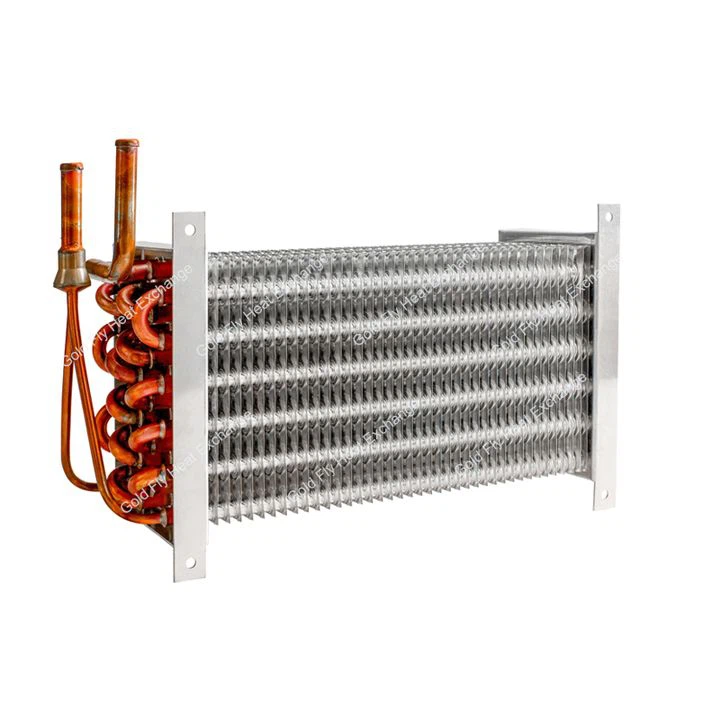
Types of Evaporators and Their Ideal Feed Locations
1. Falling - Film Evaporator
In a falling - film evaporator, the liquid feed is typically introduced at the top of the evaporator tubes. This design allows the liquid to form a thin film that flows down the inner surface of the tubes under the influence of gravity. As the film falls, it is heated by the steam on the outside of the tubes, and evaporation occurs. The top - feed arrangement ensures a uniform distribution of the liquid film, which is crucial for efficient heat transfer. You can learn more about the components of an evaporator like this in our Chiller Evaporator Coil section.
2. Forced - Circulation Evaporator
Forced - circulation evaporators are suitable for handling highly viscous or fouling liquids. In these evaporators, the feed can be introduced at the bottom or near the suction of the circulation pump. The pump then forces the liquid through the heating tubes, ensuring good mixing and heat transfer. This type of arrangement is beneficial for maintaining a high flow rate and preventing the deposition of solids on the heating surfaces. Our New Evaporator Coil options can be used in forced - circulation evaporators to enhance their performance.
3. Rising - Film Evaporator
In a rising - film evaporator, the feed is usually introduced at the bottom of the tubes. The liquid is heated as it rises through the tubes, and the vapor generated helps to lift the liquid upward. This type of evaporator is suitable for liquids with low viscosity and high vaporization rates. The bottom - feed design allows for a natural upward flow of the liquid - vapor mixture, facilitating efficient evaporation. To understand the physical specifications that might affect the feed location in this type of evaporator, you can refer to our Evaporator Coil Dimensions page.
Experimental and Simulation Approaches
In addition to theoretical considerations, experimental and simulation methods can be used to determine the optimal feed location. Conducting small - scale experiments with the actual feed liquid can provide valuable insights into the flow behavior, heat transfer, and evaporation characteristics. Computational fluid dynamics (CFD) simulations can also be employed to model the fluid flow and heat transfer processes within the evaporator. These simulations can predict the performance of different feed locations and help in making a more informed decision.
Conclusion
Choosing the right feed location for an evaporator is a complex process that requires a thorough understanding of the feed liquid properties, the type of evaporator, and the desired performance goals. By considering factors such as viscosity, boiling point elevation, foaming tendency, and heat transfer requirements, and by leveraging experimental and simulation techniques, you can optimize the feed location to achieve maximum efficiency and productivity.
If you are in the market for an evaporator or need further advice on choosing the appropriate feed location for your specific application, we are here to help. Our team of experts has extensive experience in the field and can provide customized solutions to meet your needs. Contact us today to start a productive discussion about your evaporator requirements.
References
- Perry, R. H., & Green, D. W. (Eds.). (2008). Perry's Chemical Engineers' Handbook. McGraw - Hill.
- Geankoplis, C. J. (2003). Transport Processes and Unit Operations. Prentice Hall.