

As an evaporator supplier, I've been asked many times about the function of the tubes in an evaporator. In this blog, I'll delve into the details of what these tubes do and why they are so crucial in the overall operation of an evaporator.
The Basics of an Evaporator
Before we discuss the tubes, it's essential to understand the basic function of an evaporator. An evaporator is a key component in a refrigeration or air - conditioning system. Its main role is to absorb heat from the surrounding environment. In a refrigeration cycle, the evaporator takes in a low - pressure, low - temperature refrigerant and converts it from a liquid state to a gaseous state by absorbing heat.
The Role of Tubes in an Evaporator
The tubes in an evaporator play several vital functions, which are fundamental to the efficient operation of the entire system.
Heat Transfer
One of the primary functions of the tubes is to facilitate heat transfer. The refrigerant flows through the tubes, and the outer surface of the tubes is in contact with the medium from which heat needs to be absorbed. For example, in an air - conditioning system, the tubes are surrounded by air. The heat from the air is transferred to the refrigerant inside the tubes.
The design and material of the tubes are carefully selected to optimize heat transfer. Most evaporator tubes are made of materials with high thermal conductivity, such as copper or aluminum. Copper is a popular choice because it has excellent thermal conductivity, corrosion resistance, and is relatively easy to work with during the manufacturing process.
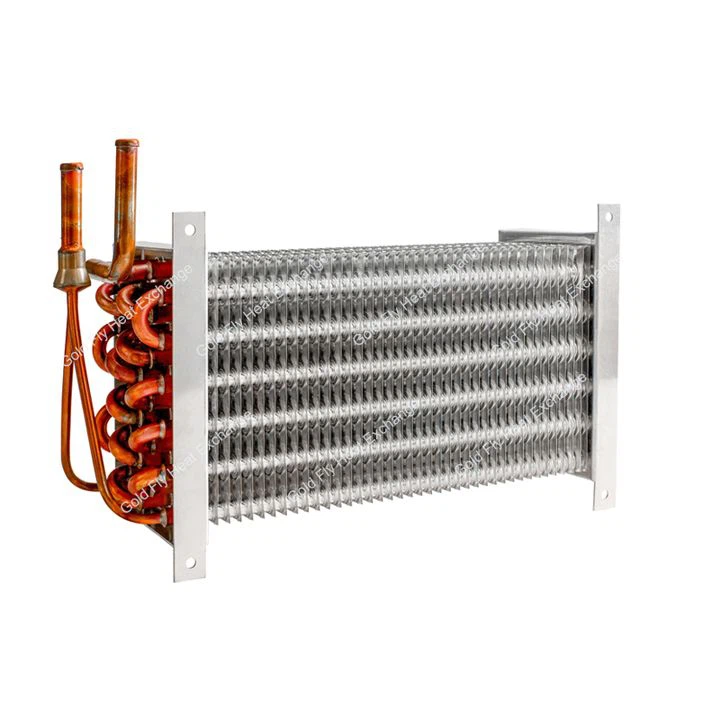
The surface area of the tubes also plays a significant role in heat transfer. To increase the surface area available for heat exchange, the tubes are often finned. Fins are thin metal sheets attached to the outside of the tubes, which greatly increase the contact area between the tube surface and the surrounding medium. This enhanced surface area allows for more efficient heat transfer, enabling the evaporator to absorb more heat in a given amount of time.
Refrigerant Flow
The tubes serve as a conduit for the refrigerant. They ensure that the refrigerant flows smoothly through the evaporator. The refrigerant enters the evaporator through the tubes in a liquid or a two - phase (liquid - vapor) state. As it absorbs heat from the surroundings, it gradually changes into a gaseous state.
The design of the tube layout is crucial for proper refrigerant flow. In some evaporators, the tubes are arranged in a serpentine pattern. This layout allows for a longer path for the refrigerant to travel, maximizing the time it spends in the evaporator and increasing the opportunity for heat absorption.
The diameter of the tubes also affects the refrigerant flow. A smaller diameter tube can create more resistance to flow but may increase the velocity of the refrigerant, which can enhance heat transfer in some cases. On the other hand, a larger diameter tube allows for a higher volume of refrigerant to flow with less resistance. The selection of tube diameter depends on various factors, including the type of refrigerant, the capacity of the evaporator, and the operating conditions.
Structural Support
In addition to heat transfer and refrigerant flow, the tubes provide structural support to the evaporator. They are often part of a complex network of components that make up the evaporator unit. The tubes help maintain the shape and integrity of the evaporator, allowing it to withstand the pressure and forces exerted during operation.
The tubes are typically connected to headers or manifolds, which distribute the refrigerant evenly among the tubes. These connections need to be strong and leak - proof to ensure the proper functioning of the evaporator. The structural design of the tubes and their connections is carefully engineered to meet the specific requirements of the application.

Different Types of Evaporator Tubes and Their Impact on Function
There are several types of evaporator tubes, each with its own characteristics and impact on the function of the evaporator.
Smooth Tubes
Smooth tubes are the simplest type of evaporator tubes. They have a plain outer surface, which makes them relatively easy to manufacture and clean. However, their heat transfer efficiency is lower compared to finned tubes because they have a smaller surface area for heat exchange. Smooth tubes are often used in applications where the heat transfer requirements are not extremely high, or where simplicity and ease of maintenance are important factors.
Finned Tubes
As mentioned earlier, finned tubes are designed to increase the surface area for heat transfer. There are different types of fins, such as plate fins and spiral fins. Plate fins are flat metal sheets attached to the tubes, while spiral fins are wound around the tubes in a spiral pattern. Finned tubes can significantly improve the heat transfer efficiency of the evaporator, allowing it to operate more effectively and consume less energy.
The choice between smooth and finned tubes depends on the specific application. For example, in air - conditioning systems, finned tubes are commonly used because they can provide better heat transfer performance, which is essential for maintaining a comfortable indoor environment.
Micro - channel Tubes
Micro - channel tubes are a relatively new type of evaporator tubes. They consist of a large number of small channels through which the refrigerant flows. These tubes offer several advantages, including high heat transfer efficiency, compact size, and reduced refrigerant charge.
The small channels in micro - channel tubes increase the heat transfer coefficient and allow for better distribution of the refrigerant. This results in a more efficient heat exchange process. Micro - channel tubes are often used in automotive air - conditioning systems and some commercial refrigeration applications where space is limited and high efficiency is required.
Importance of Tube Maintenance
Proper maintenance of the tubes in an evaporator is crucial for ensuring their optimal function. Over time, the tubes can accumulate dirt, debris, or scale on their outer surface. This can reduce the heat transfer efficiency of the evaporator and increase the energy consumption of the system.
Regular cleaning of the tubes is necessary to remove any contaminants. In some cases, chemical cleaning agents may be used to dissolve scale or other stubborn deposits. It's also important to inspect the tubes for any signs of damage, such as corrosion or leaks. Damaged tubes can lead to refrigerant loss, which not only affects the performance of the evaporator but can also be harmful to the environment.
Conclusion
In conclusion, the tubes in an evaporator are essential components that perform multiple functions. They are responsible for heat transfer, refrigerant flow, and structural support. The type of tubes used, their design, and maintenance all have a significant impact on the performance of the evaporator.
If you are in the market for an evaporator, understanding the function of the tubes can help you make an informed decision. We, as an evaporator supplier, offer a wide range of evaporators with different tube designs to meet your specific needs. Whether you need an evaporator with Evaporator Coil Dimensions, a Chiller Evaporator Coil, or a New Evaporator Coil, we have the expertise and products to provide you with a high - quality solution.
If you are interested in learning more about our evaporators or would like to discuss a potential purchase, please feel free to contact us for a detailed consultation. We look forward to working with you to meet your evaporator requirements.
References
- ASHRAE Handbook - Refrigeration. American Society of Heating, Refrigerating and Air - Conditioning Engineers.
- Incropera, F. P., & DeWitt, D. P. (2002). Fundamentals of Heat and Mass Transfer. John Wiley & Sons.
- Stoecker, W. F., & Jones, J. W. (1982). Refrigeration and Air Conditioning. McGraw - Hill.